
 Saul Goodman
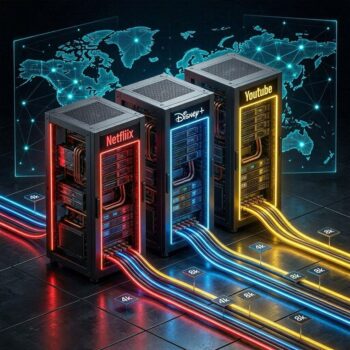
Let me ask you a question. You’re sitting on your couch, you log onto lottery-expert.com, checking those beautiful, life-changing winning numbers. It’s smooth. It’s fast. But have you ever paused—between dreaming about your 98-inch TV and a garage full of Teslas—to wonder about the other kind of jackpot?
I’m talking about the pure engineering sorcery it takes for entertainment giants to stream millions of 4K videos simultaneously without the entire global internet exploding into a ball of celestial fire.
If you think beating the odds on a standard 6-out-of-49 draw is hard, try delivering 25 Megabits of data per second to a hundred million people at 8:00 PM on a Friday. That is a logistical nightmare that would make a cartel boss sweat. But three distinct empires cracked the code, and their strategies are as different as a legal loophole and a back-alley deal.
Let’s lay out the evidence.
1. Netflix: The “Off-Grid” Operation
Netflix doesn’t trust middlemen. Why? Because middlemen get greedy, that’s why!
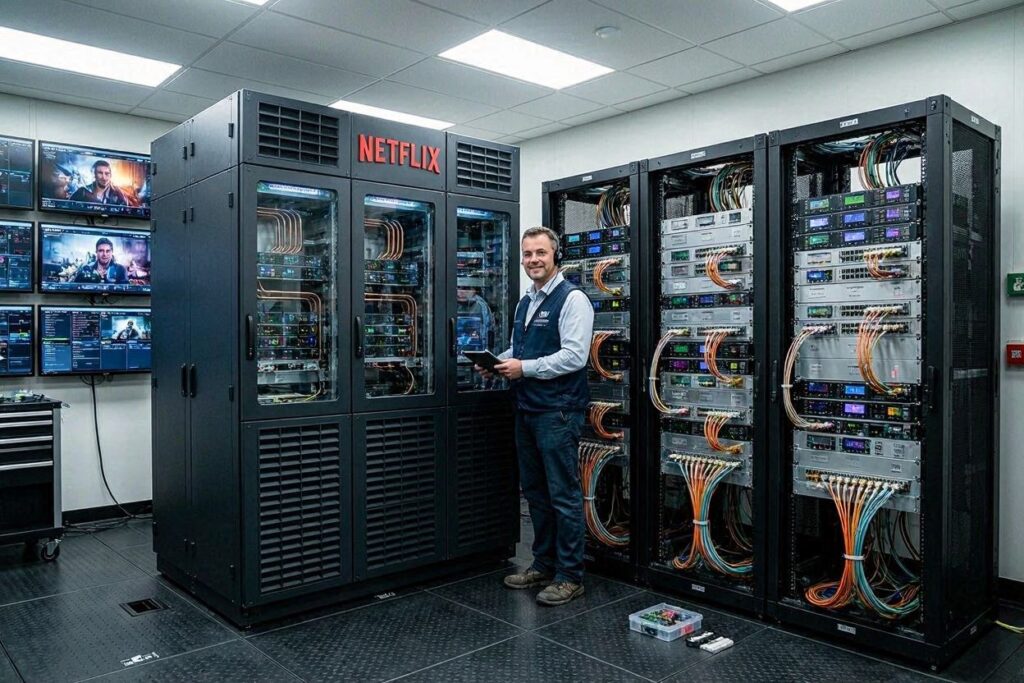
If Netflix rented their pipelines from standard commercial delivery networks, the bill would scale up faster than a tracking device on a getaway car. Every single user hitting play would cost them a linear fee. So, what did they do? They went completely rogue and built Open Connect.
They built their own proprietary, custom hardware boxes—stuffed with ultra-fast flash storage—and shipped them directly to Internet Service Providers around the world. For free! Why would the telecom
companies take them? Because it saves the ISPs a fortune in long-distance data transit fees.
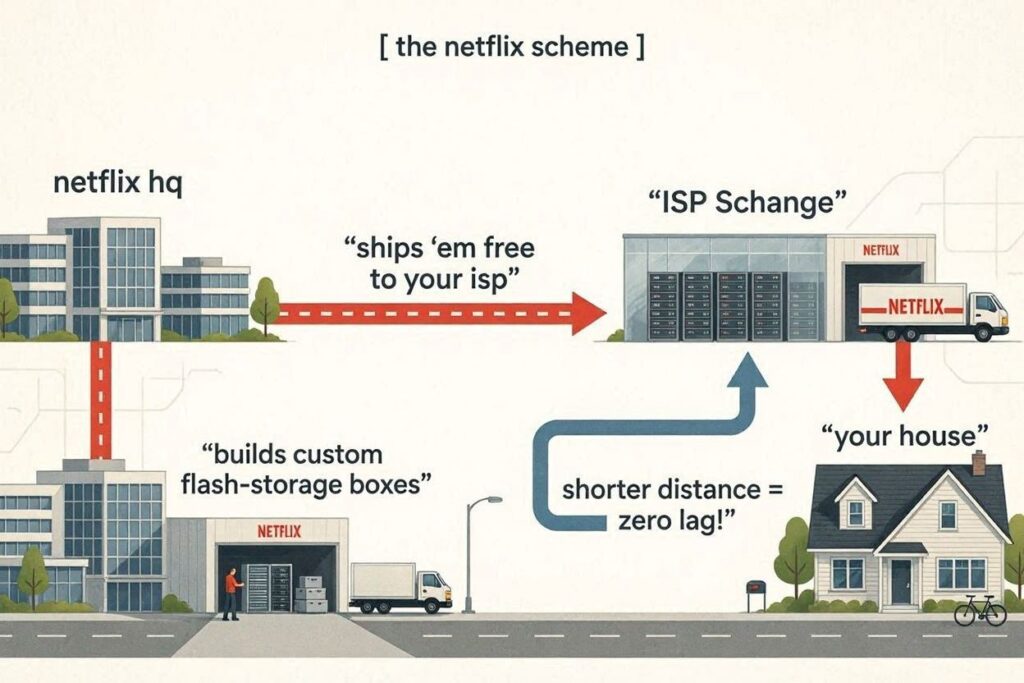
It is a beautiful, symbiotic racket. Netflix updates these local boxes in the dead of night, predicting exactly what you want to watch before you even know you want to watch it. When you press play, the file isn’t traveling across the ocean; it’s coming from a box sitting a few miles down the road in your local telecom office. Boom. Clear visual fidelity, zero buffering, absolute control.
2. Disney+: The “Rent-A-Pipe” Syndicate
Now look at Disney. When they entered the streaming game, they didn’t have fifteen years to build a custom global fleet of hardware boxes. They had franchises to launch and a hundred million subscribers banging on the door now.
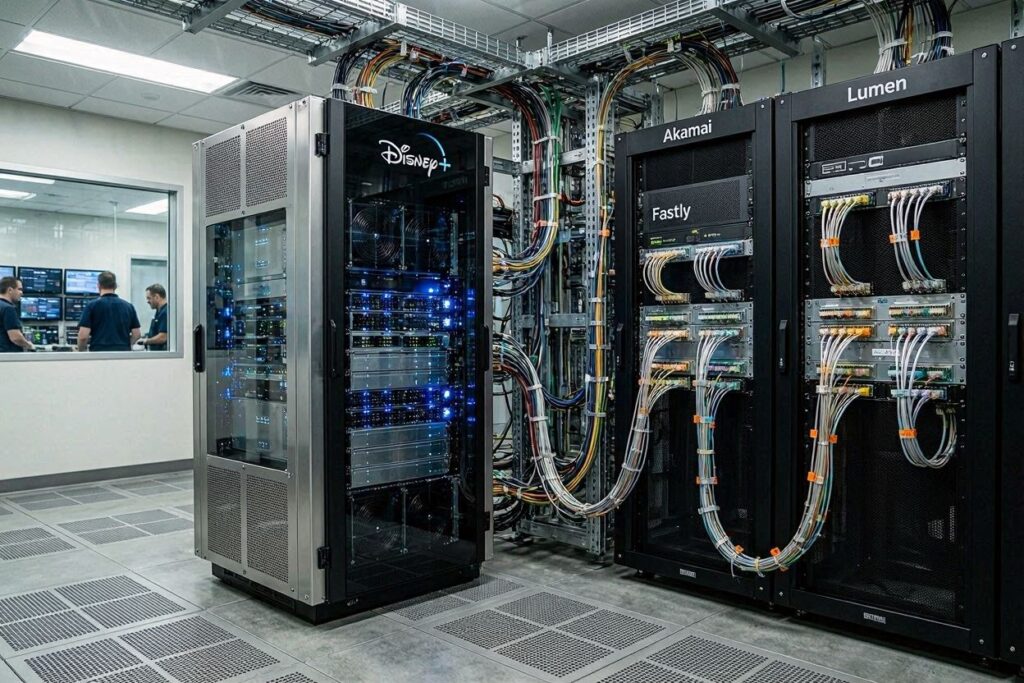
Disney didn’t build the neighborhood; they just bought up the local infrastructure. They use a Multi-CDN strategy.
Instead of managing physical boxes, Disney writes massive checks to the biggest commercial operators on the market—Akamai, Fastly, Lumen. When a massive franchise episode drops and millions of people hit the servers simultaneously, Disney’s automated routing brain acts like a crooked traffic cop. It splits the load in real-time. If Akamai’s pipeline gets jammed, it instantly reroutes your stream to Fastly.
No boxes to fix, no hardware to upgrade. It’s pure, liquid flexibility—highly scalable, but you’re always paying the middleman his cut.
3. YouTube: The “Cosmic Anomaly”
If Netflix is a finely tuned Swiss watch, YouTube is the entire space-time continuum.

We’re talking about 2.5 billion active users. 500 hours of video uploaded every single minute. You can’t pre-load that onto a local box. It’s too chaotic! So Google built a three-tier empire powered by pure algorithmic prediction.
The YouTube Caching Ladder:
- Tier 1 (The Vault): Core Google Data Centers. Holds 100% of human history, down to that blurry video of a cat from 2006.
- Tier 2 (The Hubs): Regional multi-city nodes catching the moderately popular stuff.
- Tier 3 (The Edge): Google Global Cache boxes sitting inside your ISP, holding only the top viral hits for your exact zip code.
If you watch a trending music video, it hits you instantly from Tier 3. If you look up an obscure, 15-year-old coding tutorial with 40 views, Google’s brain pulls it from the Tier 1 vault, streams it to you, and temporarily caches it locally just in case your neighbor gets the same wild idea.
To top it off, they encode hundreds of different resolution and codec combinations for every single video file because storing data is dirt cheap, but computing it on the fly is a sucker’s game.
The Ultimate Verdict
So, what’s the takeaway for the savvy crowd over at lottery-expert.com?
| The Player | The Strategy | The Playbook |
| Netflix | The Solo Outlaw | Own the hardware, eliminate the middleman, control the local loop. |
| Disney+ | The High-Roller | Rent the best pipes money can buy, shift the traffic, avoid the hardware headache. |
| YouTube | The House | Predict human behavior with AI, build a multi-tier empire, rewrite the internet protocols. |
In the grand casino of the internet, these giants proved that winning isn’t just about having the best content—it’s about knowing exactly how to distribute the deck so the house never loses its connection.
Now, go check those numbers, play smart, and remember… Better Call Saul!